Manual Mode vs. Auto: When (and Why) You Should Actually Switch
I get asked some version of this question almost every week: "When am I ready to switch to manual mode?" And my answer always surprises people a little. You don't need to feel ready. You just need to understand what manual mode is actually giving you, because once you see it, you'll want to switch long before you feel "ready."
I shot in auto mode for the first year I owned a camera. I told myself I'd switch once I "understood photography better." Looking back, that was completely backwards. I didn't understand photography better because I never gave myself the chance to actually make the decisions. Auto mode was making them for me, and quietly keeping me stuck.
Let's talk about what's really going on when you shoot in auto, why it holds people back, and how to make the jump to manual without it feeling like learning a new language overnight.
What Auto Mode Is Actually Doing
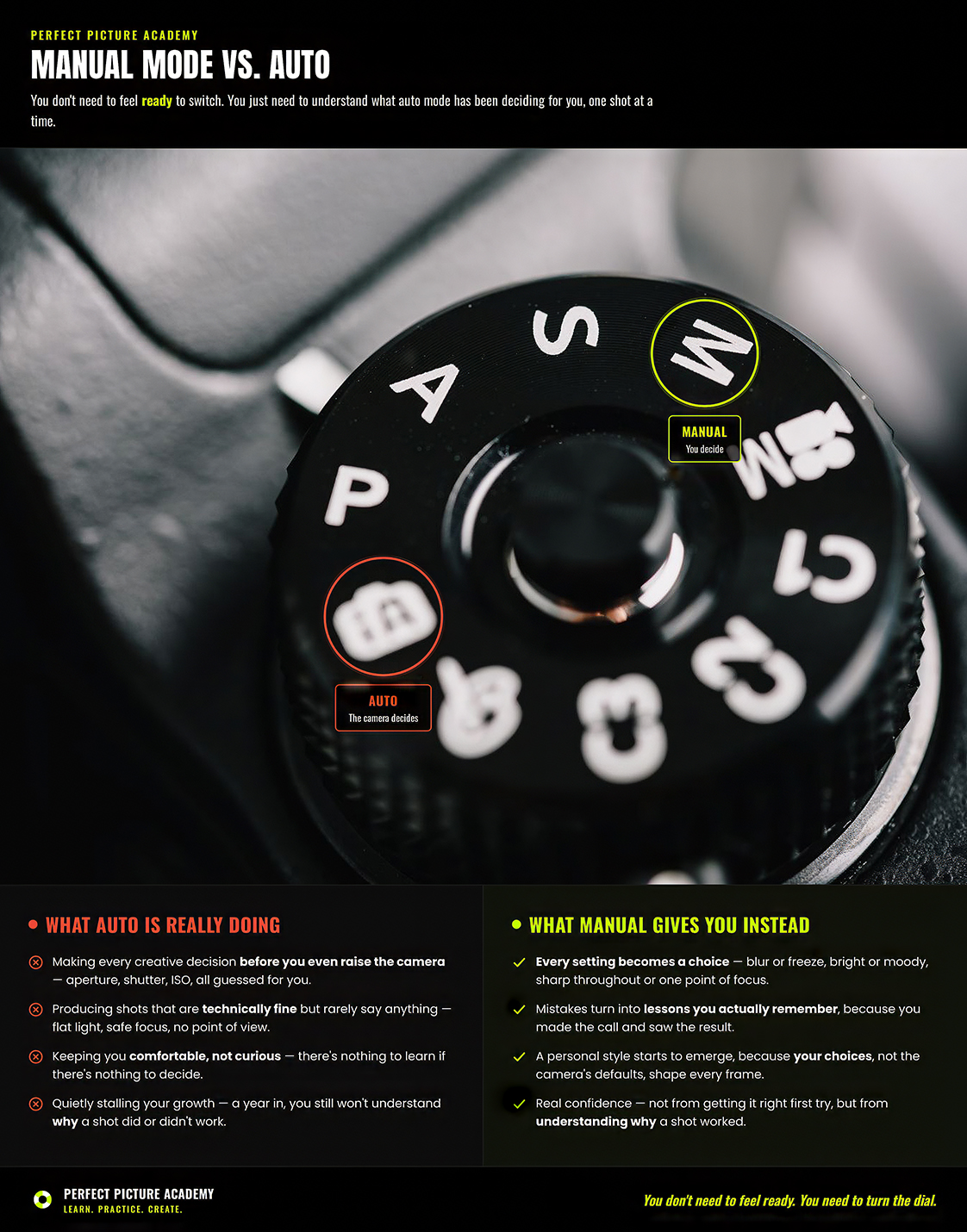
When you shoot in auto mode, your camera is making three decisions for you every single time you press the shutter: your aperture, your ISO, and your shutter speed, the exact three settings we covered in an earlier post on the exposure triangle. Your camera's internal light meter looks at the scene, guesses what you're trying to photograph, and picks settings designed to get you a "correctly" exposed picture.
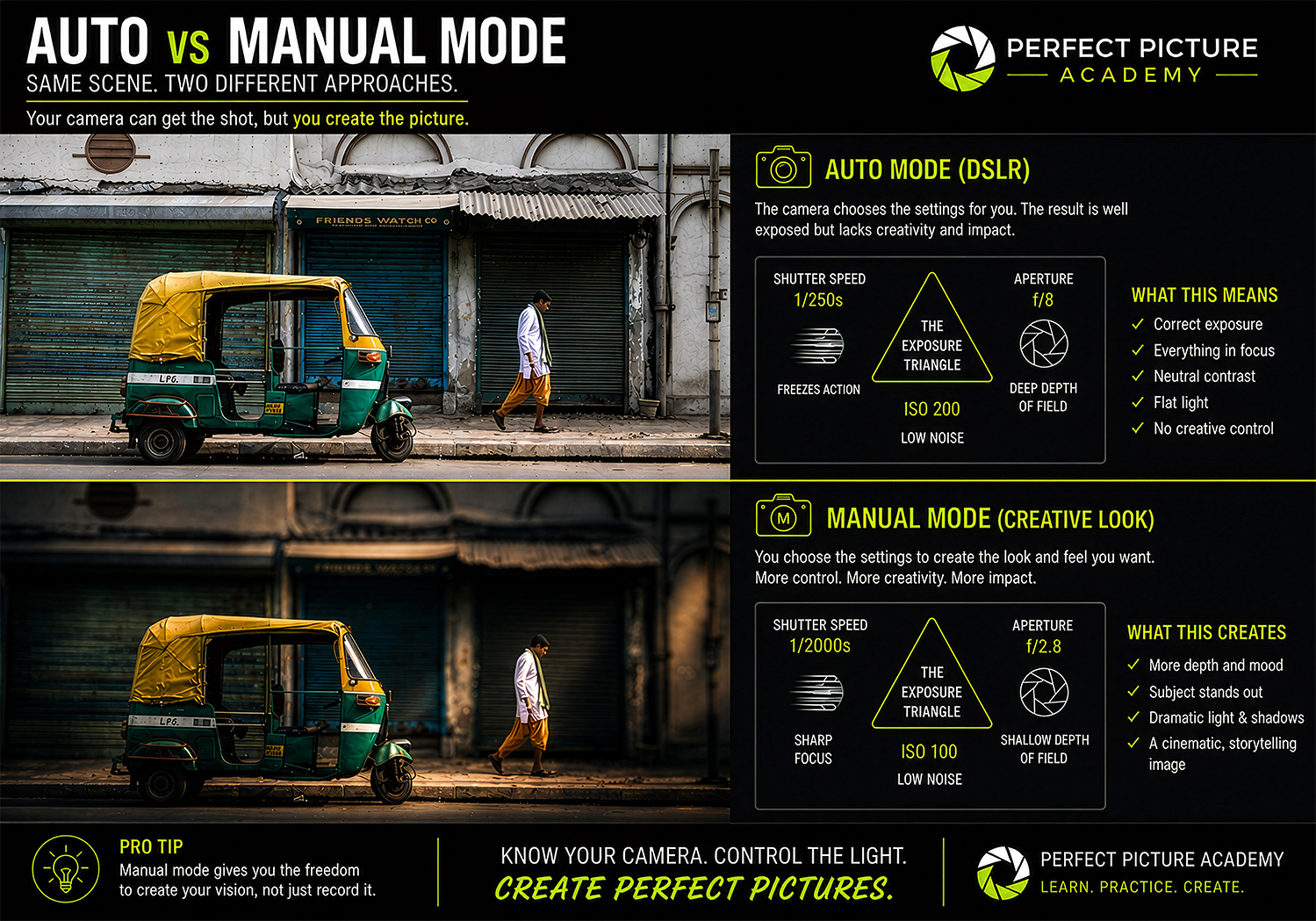
The key word there is "guesses." Your camera doesn't know you're trying to blur the background behind your daughter's birthday cake. It doesn't know you want to freeze a splash of water mid-air. It doesn't know you're going for a moody, underexposed look on purpose. It just knows how to make a technically balanced exposure, and that's all it's optimizing for.
Auto mode isn't broken, and it isn't stupid. It's just limited by design. It can get you a "correct" picture. It can't get you your picture.
Why This Quietly Holds People Back
Here's the part that took me way too long to realise. Every time you shoot in auto, you're not just letting the camera choose the settings, you're also skipping the chance to learn what those settings actually do. It's the difference between being a passenger in a car and actually learning to drive. You can ride in the passenger seat for years and never learn to parallel park.
I see this constantly with people who've owned a nice camera for years and still describe themselves as "not very technical." It's not that they lack the ability, it's that auto mode never forced them to build the muscle. Manual mode isn't harder because the concepts are complicated, it's harder because it asks you to actually engage with decisions you've been outsourcing.
When Auto Mode Actually Makes Sense
I want to be fair here, because auto mode isn't the enemy. There are absolutely moments where it's the right call. If you're handing your camera to a stranger to snap a quick group photo, auto mode is going to get you a usable shot faster than trying to explain aperture priority to someone in thirty seconds. If you're in a fast-changing situation with wildly inconsistent lighting and you genuinely need to just capture the moment, auto can be a safety net.
The problem isn't that auto mode exists. The problem is treating it as your default forever, instead of as one tool among several.
The Bridge: Try Priority Modes First
If jumping straight into full manual feels overwhelming, there's a middle step most people skip, and it's a great place to start. Aperture Priority mode (usually labeled A or Av on your dial) lets you choose your aperture, and the camera automatically picks a shutter speed to match. Shutter Priority (S or Tv) works the opposite way, you choose your shutter speed, and the camera handles the aperture.
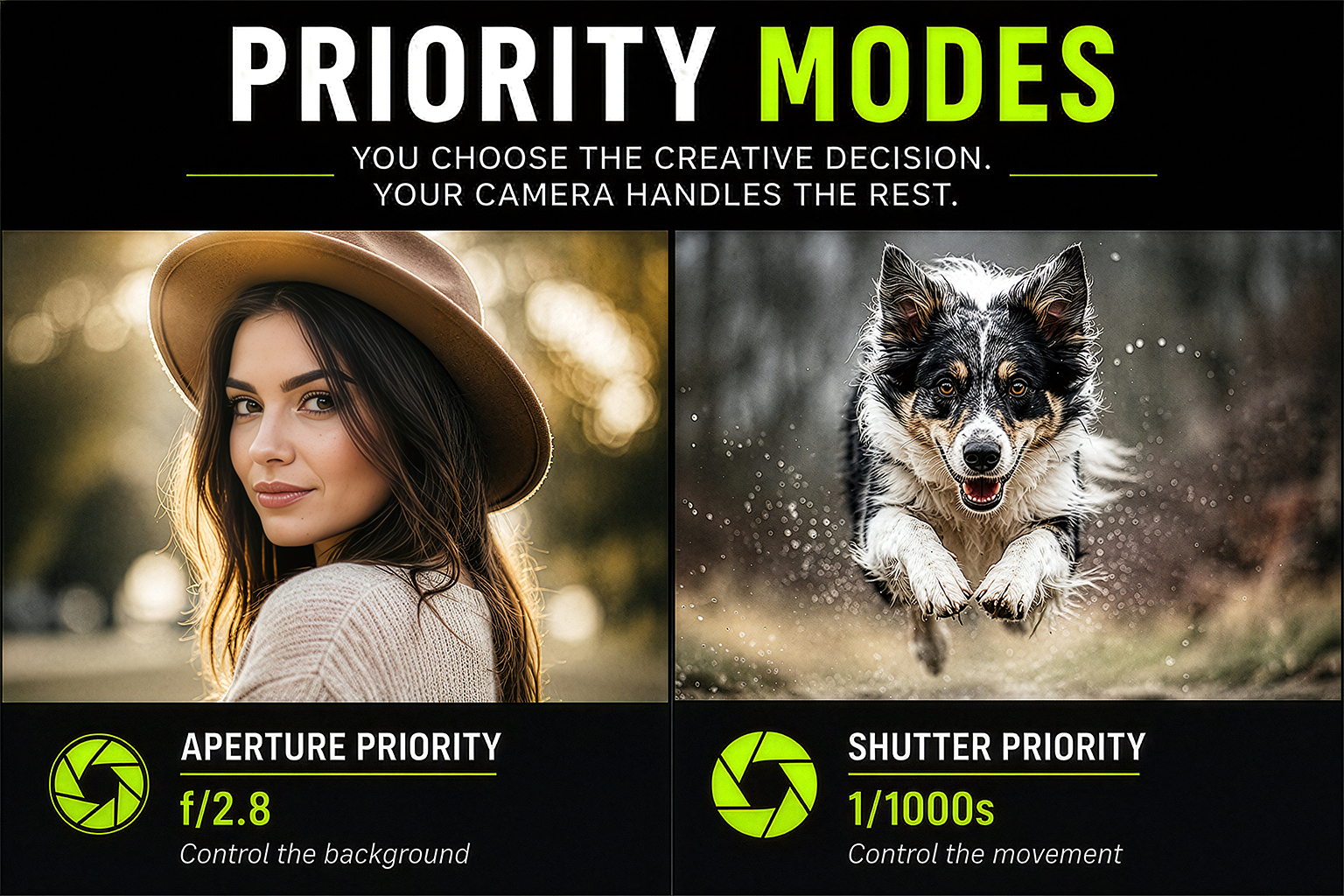
This is a fantastic way to start making creative decisions without juggling all three settings at once. Want a blurry background for a portrait? Switch to Aperture Priority, dial in f/2.8, and let the camera worry about shutter speed. Want to freeze your dog mid-jump? Switch to Shutter Priority, set it to 1/1000, and let the camera handle the aperture. You're still learning to think in terms of creative intent, just with training wheels on.
Making the Full Switch to Manual
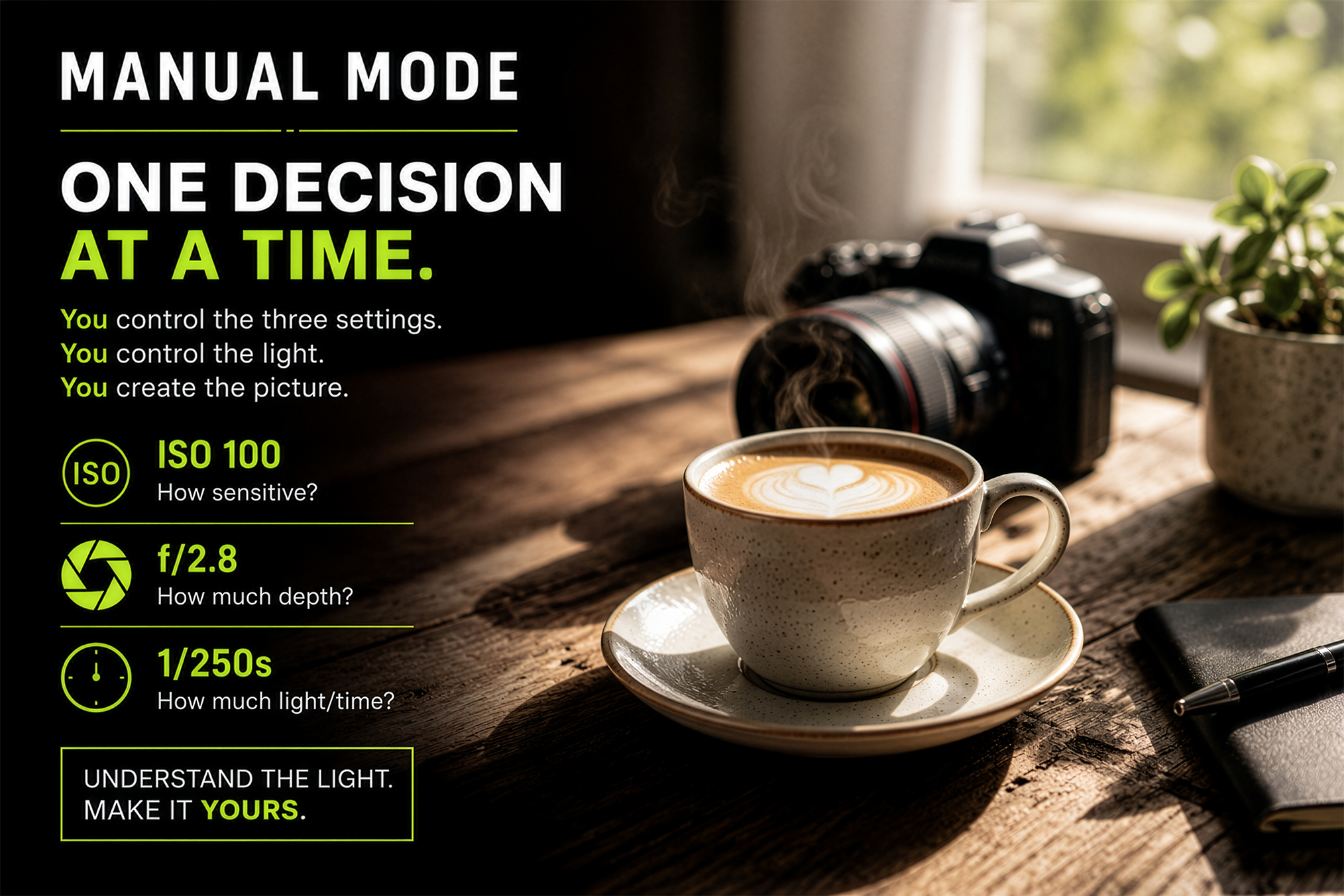
When you're ready to take off the training wheels, here's the good news: manual mode isn't three separate skills, it's one skill applied three times. You're always asking the same question. How much light do I need, and how do I want to get it? Do I want it from a wide aperture, a slow shutter, or a boosted ISO, or some balance of all three?
Start in a low-pressure setting. Photograph something that isn't moving, in decent light, somewhere with no time pressure. A cup of coffee on your kitchen table works just fine. Set your ISO low, pick an aperture based on how much background blur you want, and then adjust your shutter speed until your camera's light meter tells you you're properly exposed. That's it. That's the whole process. Do it a few dozen times and it stops being three separate settings you're consciously juggling, and starts becoming one intuitive feel for light.
Final Thoughts
You don't need permission to switch to manual mode, and you definitely don't need to wait until you feel like a "real" photographer. The feeling of readiness comes after you start, not before. Every photographer who now shoots manual without thinking twice once stood exactly where you are, staring at a dial with four unfamiliar letters on it, wondering if they were about to ruin every picture they took that day.
You won't ruin them. You'll take some bad ones, sure, everybody does. But you'll also start taking pictures that actually reflect what you saw in your head instead of what your camera guessed you wanted. That trade is always worth it.
Ready to take pictures you're proud of?
Start with my free Camera Settings Checklist. It shows you exactly what to check before every shot, so you never miss an important setting again.
When you're ready to go further, Premium teaches you my SIMPLE system step by step, so you can take pictures you're proud of with the camera you already own.
Get Your Free Camera Settings Checklist
Know exactly what to check before every shot, so you never miss an important setting again. Free, straight to your inbox.
No spam, ever. Unsubscribe any time. Our Privacy Policy is linked at the bottom of this page.