
Photography Composition 101: Rule of Thirds, Leading Lines, and Negative Space
Years ago I photographed the same sunset as a friend of mine, standing about six feet apart, same camera settings, same light, same evening. His picture looked like a postcard. Mine looked like a snapshot. It took me an embarrassingly long time to figure out why, and the answer had nothing to do with settings at all. He'd simply pointed his camera differently. He'd composed the shot, and I'd just pointed and clicked.
This is something I wish someone had told me sooner: you can master aperture, ISO, and shutter speed completely, and still take forgettable pictures, because exposure only controls how much light hits your sensor. Composition controls whether anyone actually wants to look at the result. It's the difference between a technically correct picture and one that actually holds someone's attention.
The good news is that composition isn't some mysterious artistic gift you're either born with or not. It's a set of learnable techniques, and once you know them, you'll start seeing them everywhere, in movies, in ads, in paintings hanging in museums. Let's go through the big three that will do the most for your photos immediately.
The Rule of Thirds
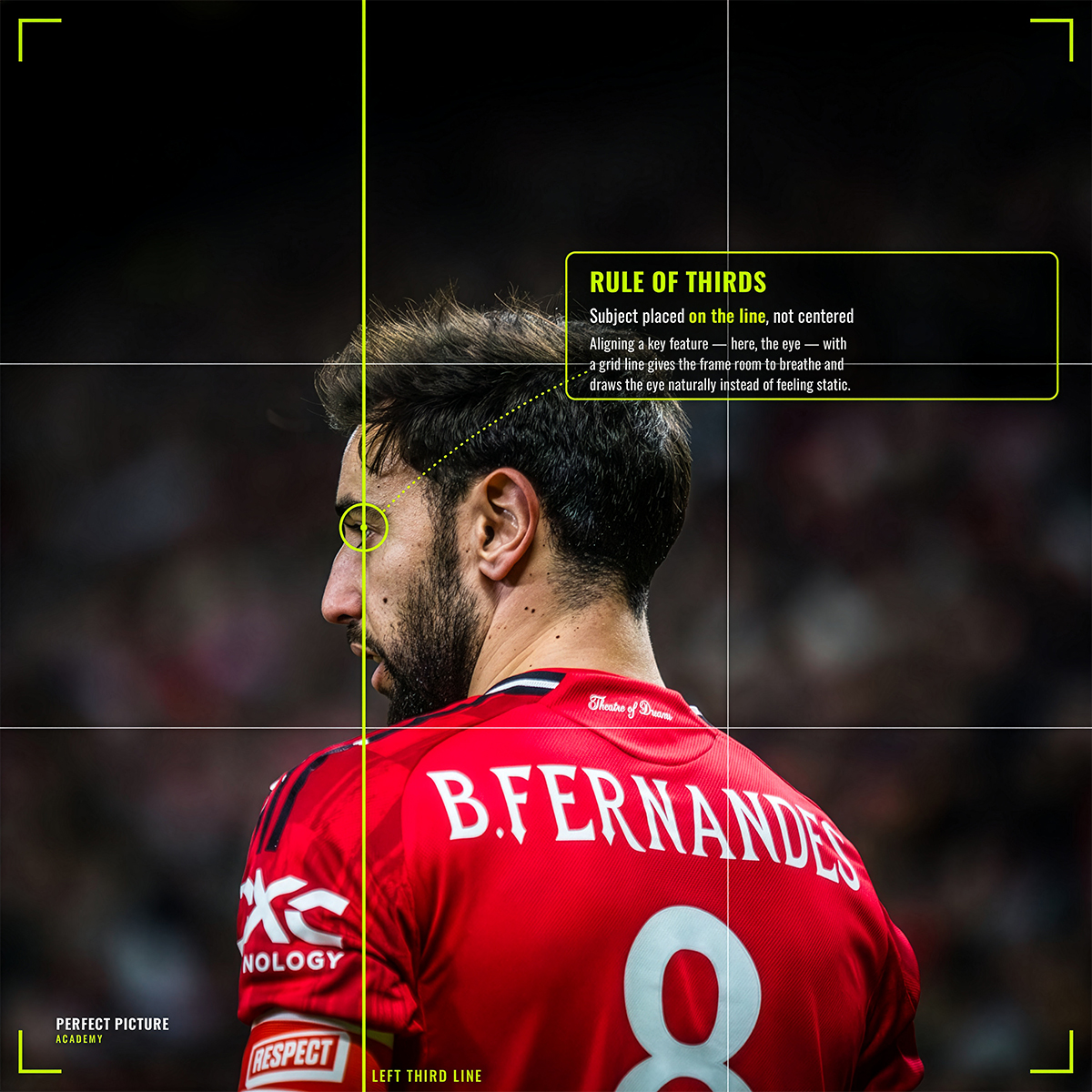
This is the one you've probably heard of already, and there's a reason it gets mentioned in literally every beginner photography guide, it works. Imagine your frame divided into a grid, three columns and three rows, like a tic-tac-toe board. The rule of thirds simply says: instead of placing your subject dead center, place it along one of those grid lines, or at one of the four points where the lines intersect.
Leading Lines
Leading lines are exactly what they sound like, lines within your picture that draw the viewer's eye toward your subject, or deeper into the frame. Think of a winding road disappearing into a mountain range, a fence leading toward a farmhouse, or a row of streetlights guiding your eye down a city block at night.
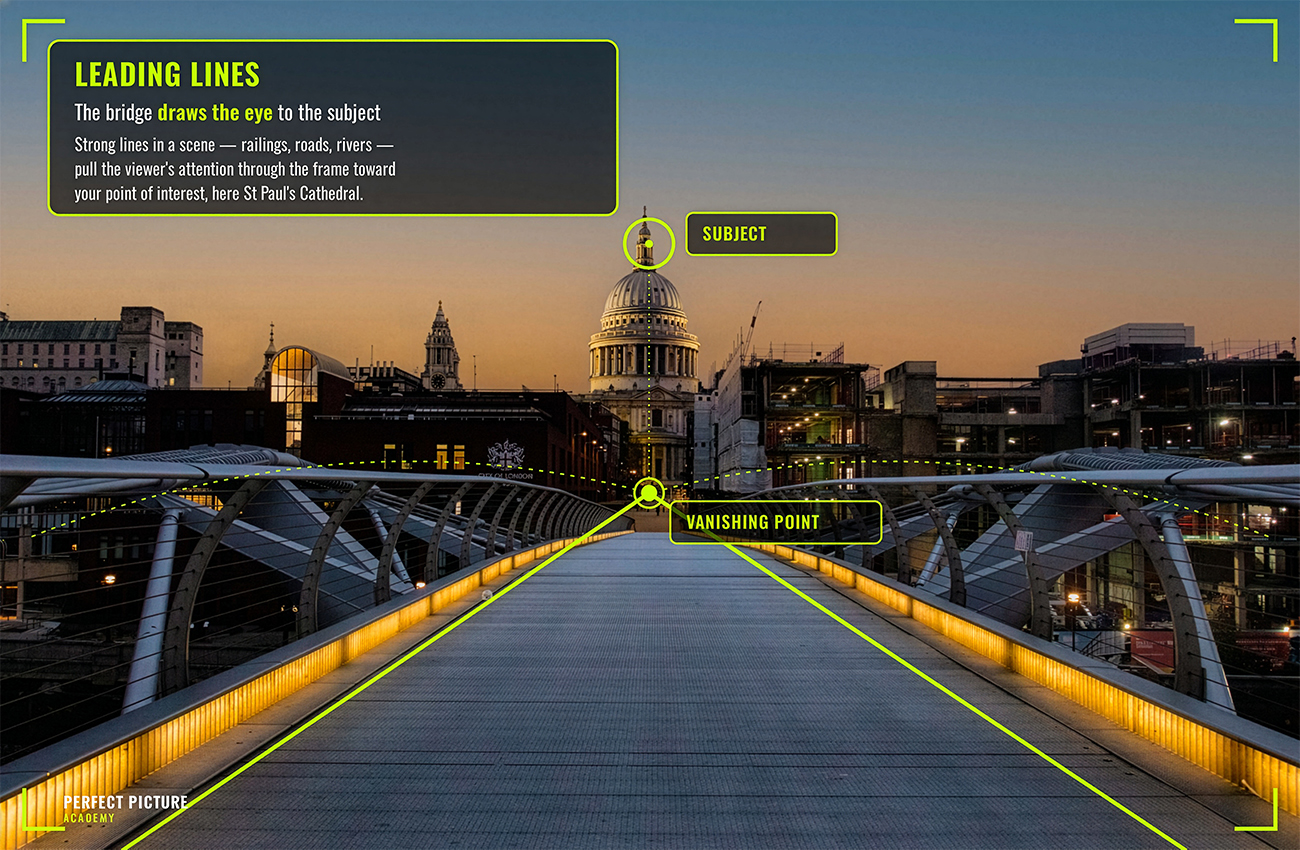
Our eyes are naturally drawn to follow lines, it's just how human vision works, and photographers have been using that to their advantage for as long as the medium has existed. Once you start looking for leading lines, you'll notice they're everywhere: staircases, hallways, rivers, shorelines, even the edge of a shadow.
Next time you're out shooting, try this: before you take the picture, ask yourself, is there a line in this scene I could use to pull the viewer's eye toward my subject? Sometimes it means physically moving a few steps to one side so a path or railing lines up correctly. That small adjustment can be the difference between a flat picture and one with real depth.
Negative Space
Negative space is the empty area around your subject, the sky, a blank wall, still water, an empty field. New photographers often feel like they need to fill every inch of the frame with something interesting, but some of the most striking pictures do the opposite. They give the subject room to breathe by surrounding it with intentional emptiness.
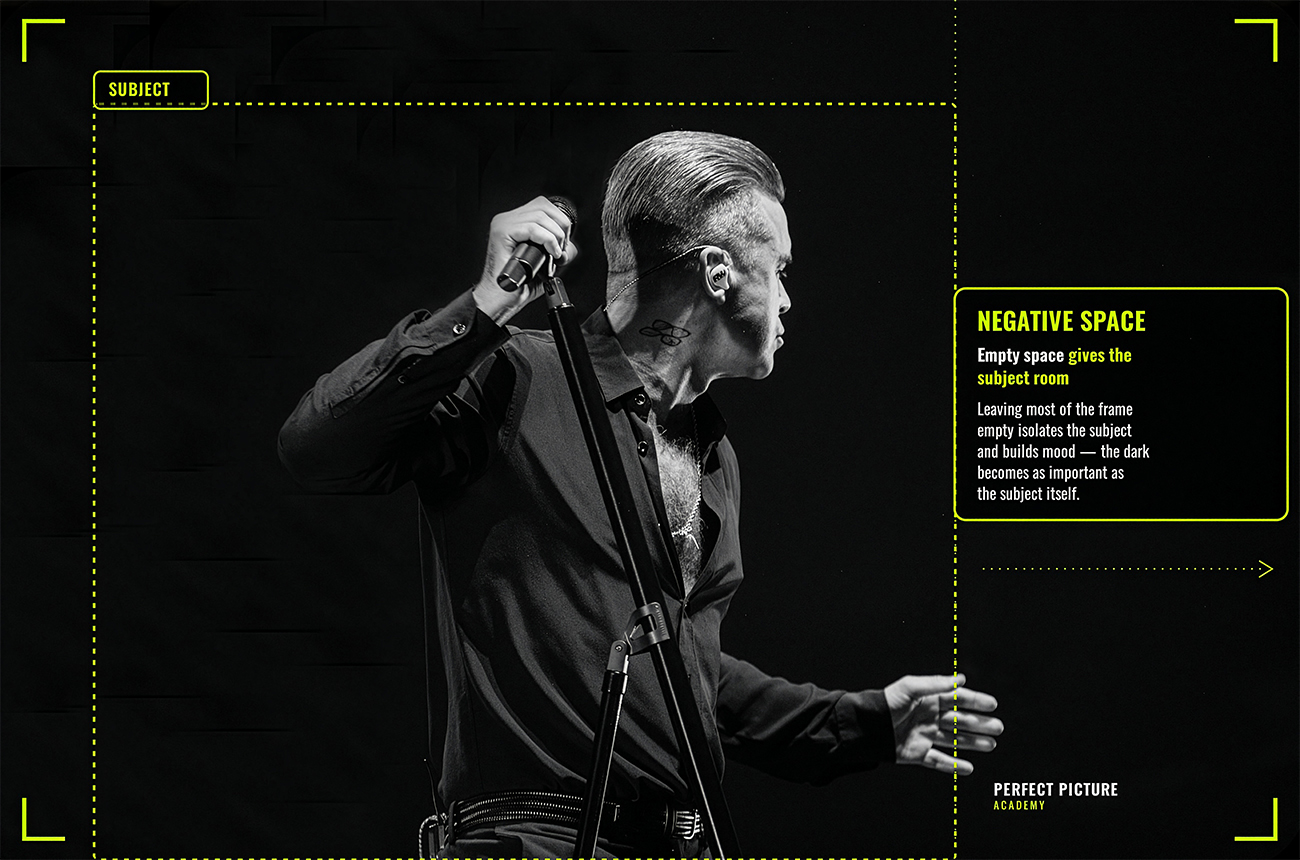
Negative space does two things really well. First, it isolates your subject, making it impossible for the viewer's eye to wander anywhere else. Second, it creates mood. A tiny figure standing in a vast, empty landscape communicates something completely different than that same figure filling the frame up close, even though it's the same subject.
If your pictures feel cluttered or busy, negative space is often the fix. Try zooming out, or physically stepping back, and letting more of the empty scene into your frame around your subject. It can feel counterintuitive at first, like you're wasting the shot, but that empty space is doing real compositional work.
Putting It All Together
You don't need to consciously apply all three of these to every single picture you take, that would slow you down to the point of missing the shot entirely. Instead, let them become part of how you naturally see a scene. Before you press the shutter, glance at your frame and ask a couple of quick questions. Where's my subject sitting in the frame? Is there anything guiding the eye toward it? Does this need more breathing room?
Over time, this stops being a checklist and starts being instinct, the same way an experienced driver doesn't consciously think through every step of merging onto a highway anymore. You'll find yourself composing better shots without even realizing you're doing it.
Final Thoughts
Great settings will get you a technically correct picture. Great composition is what gets you a picture people actually stop scrolling for. The techniques above aren't rules meant to box you in, they're tools meant to give you more control over how a viewer's eye moves through your picture. Learn them, practice them deliberately for a while, and then feel free to bend them once you understand why they work in the first place.
Ready to take pictures you're proud of?
Start with my free Camera Settings Checklist. It shows you exactly what to check before every shot, so you never miss an important setting again.
When you're ready to go further, Premium teaches you my SIMPLE system step by step, so you can take pictures you're proud of with the camera you already own.
Get Your Free Camera Settings Checklist
Know exactly what to check before every shot, so you never miss an important setting again. Free, straight to your inbox.
No spam, ever. Unsubscribe any time. Our Privacy Policy is linked at the bottom of this page.